

Skin cancer is the most common cancer in the United States — and when it’s caught early, it’s also one of the most treatable. A skin cancer screening is a simple, painless exam where a clinician looks over your skin for spots that could be cancer or could turn into cancer. Here’s what you need to know.
What Happens During a Skin Check?
A professional skin exam is quick and straightforward — usually about 10 to 15 minutes:
- You’ll change into a gown so your skin can be examined head to toe.
- Your clinician looks carefully at your scalp, face, ears, neck, trunk, arms, hands (including between fingers and nails), legs, feet (including soles and between toes), and buttocks.
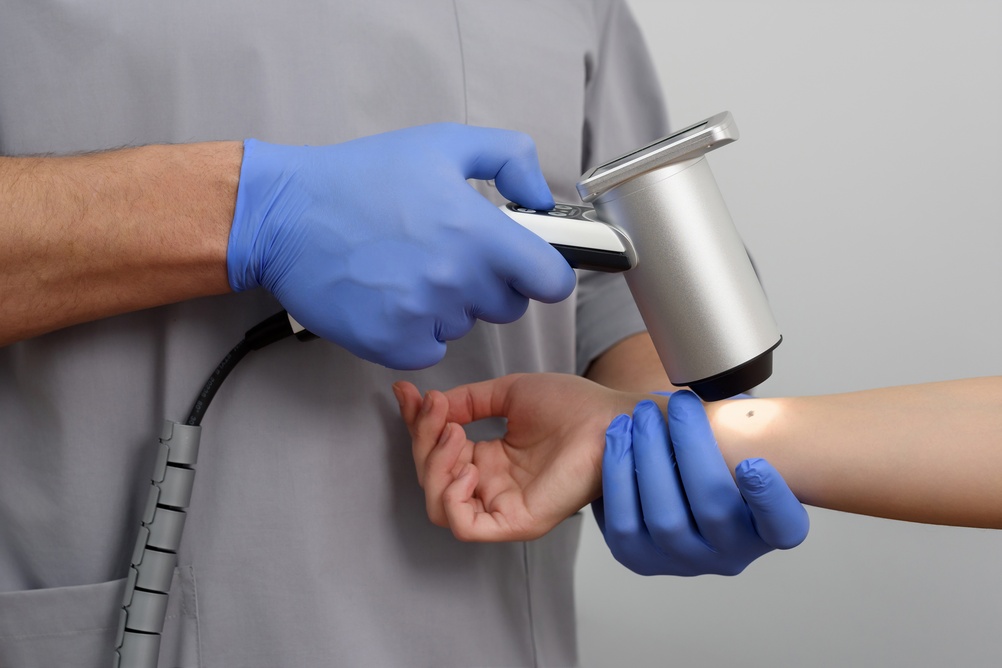
- They may use a handheld magnifying tool with a light, called a dermatoscope, to look at certain spots more closely.
- If something looks suspicious, the only way to know for sure is a biopsy — removing a small sample of the spot to check it under a microscope.
What Dermatologists Look For
Clinicians watch for moles or spots that stand out from the rest — the “ugly duckling” that doesn’t match your other moles — and for the warning signs summarized by the ABCDEs: Asymmetry, Border irregularity, Color that’s uneven, Diameter larger than a pencil eraser (about 6mm), and Evolving (changing) spots.
They also look for sores that don’t heal, and pearly, scaly, or bleeding bumps that can signal the two most common skin cancers (basal cell and squamous cell carcinoma).
Who Should Be Screened and How Often
This is where it’s worth having an honest conversation with your clinician. For adults at average risk with no symptoms, expert groups have found the evidence unclear about whether routine full-body screening saves lives, so there’s no one-size-fits-all rule. Screening makes the most sense if you are at higher risk.
Consider a professional skin exam if you:
- Have a personal history of skin cancer (melanoma or non-melanoma). After a melanoma or squamous cell cancer, regular follow-up skin exams are recommended.
- Have a family history of melanoma.
- Have many moles (more than 50–100) or atypical/unusual moles.
- Have fair skin that burns easily, light eyes, red or blond hair, or lots of freckles.
- Have a history of blistering sunburns or indoor tanning use.
- Have a weakened immune system (for example, an organ transplant) — this raises risk significantly.
For higher-risk people, clinicians may recommend a full skin exam anywhere from every 3 months to once a year, sometimes with photography to track changes over time. Your clinician will personalize the schedule to your risk.
Skin Cancer Can Affect Any Skin Tone
People with darker skin get skin cancer less often, but when it happens, it’s often found later and can be more dangerous. In deeper skin tones, melanoma more often shows up in less sun-exposed areas like the palms, soles, and under the nails — so those areas deserve attention too.
Schedule an Appointment for Skin Cancer Screening Today
Early detection matters: skin cancers found early are far more survivable than those found late. If you have risk factors, or if you’ve noticed a new or changing spot, don’t wait — schedule a skin check. Between visits, get to know your own skin so you can spot changes early.