

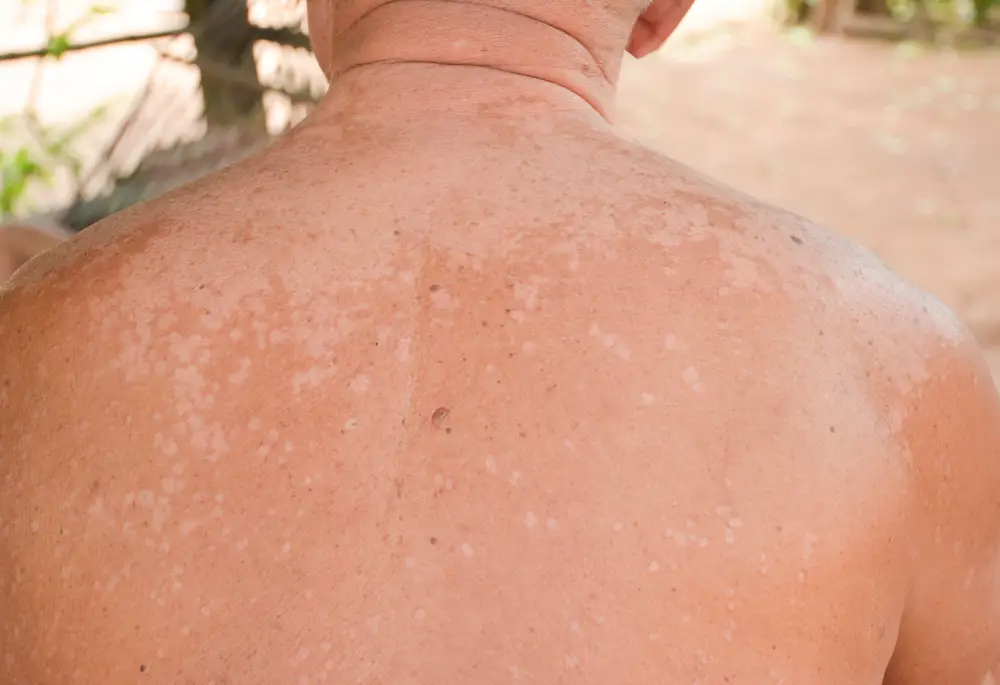
What are these spots?
Have you noticed light or dark patches on your back, shoulders, or chest that just won’t go away? They don’t hurt, and rarely itch, but no matter what you try, they seem to stick around. If this sounds familiar, you’re not alone.
Tinea versicolor, also known as pityriasis versicolor, can cause discolored circles and blotches on the skin. It occurs most commonly on the chest, back, shoulders, upper arms, and sometimes the abdomen.
The spots can be lighter or darker than your normal skin and may even appear pink, tan, yellow, or reddish. That’s where the name versicolor comes from—it simply means “many colors.” If you look closely, you may also see fine, soft scaling on the discolored patches.
Don’t worry, most people have no symptoms. Occasionally the rash may itch slightly, but for most people the only concern is the change in skin color.
What Causes Tinea Versicolor?
This rash is very common, but don’t worry, it’s not contagious. Tinea versicolor is caused by an overgrowth of a naturally occurring yeast called Malassezia. This yeast normally lives on healthy skin and doesn’t usually cause problems. Under certain conditions—especially heat and humidity—it can grow more rapidly and interfere with the skin’s normal pigmentation. Coincidentally, Malassezia is also the same yeast that can cause dandruff.
Tinea versicolor typically flares in the summer, when conditions are warmest. The rash may last weeks to months, and may recur around the same time each year. Certain factors make tinea versicolor more likely to develop, including:
- Heat
- High humidity
- Oily skin
- Increased sweating
- Oral contraceptives
- Corticosteroid use
- Diabetes (type 1 or type 2)
- Immunosuppression
- People with a family history of tinea versicolor may also be more susceptible.
How is Tinea Versicolor Treated?
Since tinea versicolor isn’t dangerous, it doesn’t necessarily need treatment. You may choose to leave it as is if the discoloration doesn’t bother you. However, if you want the rash gone, there are strategies you can try yourself at home before coming into a clinic.
Shampoos used as body washes:
- Ketoconazole 1%
- Selenium sulfide 1%
- Zinc pyrithione
Arguably the most practical strategy for widespread involvement, try lathering up with one of these shampoos every day for 2 weeks. Let the lather sit for 5-10 minutes before rinsing off for best results.
Creams:
- Clotrimazole 1%
- Miconazole 2%
- Terbinafine 1%
Topical creams may be better suited for limited areas of involvement. Rub on a thin layer twice a day for 2 weeks.
What Happens After Treatment?
Recurrence is common, especially in the summer. It can be helpful to wash with one of the shampoos listed above every 2-4 weeks to prevent tinea versicolor from flaring back up.
Even after the yeast has been eliminated, your skin color may take several weeks – or even months – to return to normal. This doesn’t necessarily mean the treatment didn’t work. The color usually returns gradually. Rest assured, tinea versicolor is not permanent and does not scar skin.
Don’t forget the sunscreen! While sunscreen won’t cause the yeast to go away, it can help prevent the discoloration from getting worse. Light spots resulting from tinea versicolor won’t tan like the surrounding skin will. This means that sun exposure can make unaffected skin darker, causing the light spots to stand out even more.
When Should I See a Dermatologist for Tinea Versicolor?
Just because the spots stick around doesn’t mean that the treatment failed. So when is it time to seek care with a medical professional?
Make an appointment if:
- You see continued scale or new spots appearing after 2-4 weeks of consistent treatment
- The rash covers a large area of your body
- The rash involves uncommon areas like the face or lower extremities
- It keeps coming back
- It becomes painful, swollen, blistered, red, crusty, oozing, or very itchy
- You’re not sure the diagnosis is correct
Any of the above should prompt an in-person evaluation to escalate therapy and/or reconsideration of the diagnosis.
The good news is that tinea versicolor is common, harmless, and very treatable. Although it often recurs in warm weather, most people can keep it well controlled with occasional preventive treatment.
Ready to Treat Tinea Versicolor?
If you’re noticing persistent light or dark patches on your skin, don’t ignore the signs. Early diagnosis and the right treatment can help clear the infection and reduce the risk of recurrence.
Schedule an appointment with our dermatology team today for a personalized evaluation and treatment plan. We’re here to help you achieve healthier, clearer skin with expert care every step of the way.

Written by: Elizabeth Lloyd-Davies, Certified Physician Assistant
Elizabeth Lloyd-Davies, MPAS, PA-C, is a dedicated and board-certified Physician Assistant at Northstar Dermatology, specializing in medical dermatology. Passionate about patient care, Elizabeth takes pride in building meaningful relationships with her patients and collaborating with them to achieve their healthiest, most confident selves.